Understanding Salesforce pricing is a critical step for any business considering this powerful Customer Relationship Management (CRM) platform. Who needs to understand it? Business owners, IT managers, sales leaders, and anyone involved in technology procurement. What exactly are we demystifying? The various editions, subscription models, add-ons, and potential hidden costs associated with Salesforce. Where does this complexity arise? From Salesforce’s vast ecosystem of products and tiered offerings. When should you delve into this? Ideally, before you even begin your implementation journey, to set realistic budget expectations. Why is this so important? Because an informed decision can save your company significant resources and ensure you select the right solution. And finally, How will we do this? By providing a detailed breakdown of each major cloud, factors influencing pricing, and strategies for cost optimization.
Salesforce, at its core, is a cloud-based software company providing CRM services. It helps companies manage customer data, track sales leads, automate marketing, and improve customer service. Its expansive suite of products, often referred to as ‘Clouds,’ caters to virtually every aspect of a business’s customer-facing operations, from sales and service to marketing, analytics, and e-commerce.
The perception of Salesforce as ‘expensive’ often stems from its intricate pricing structure and the sheer breadth of its offerings. Unlike simpler SaaS tools, Salesforce is highly customizable and scalable, meaning its cost can vary dramatically based on your specific needs, the number of users, and the chosen combination of products and features. It’s not a one-size-fits-all solution, and neither is its pricing.
Before diving into specific numbers, it’s crucial to grasp the fundamental pricing model: per user, per month, billed annually. This means you pay a recurring subscription fee for each user who accesses the platform. The cost per user typically decreases as you move up to more feature-rich editions, but the overall cost increases with more users. Be aware that listed prices are often for annual contracts, and monthly billing, if available, usually comes at a premium.
Salesforce organizes its core CRM offerings into various ‘Clouds,’ each designed for a specific business function. Within each Cloud, there are multiple ‘Editions,’ which are essentially different tiers offering varying sets of features and functionalities at different price points. Understanding these editions is key to deciphering Salesforce’s pricing.
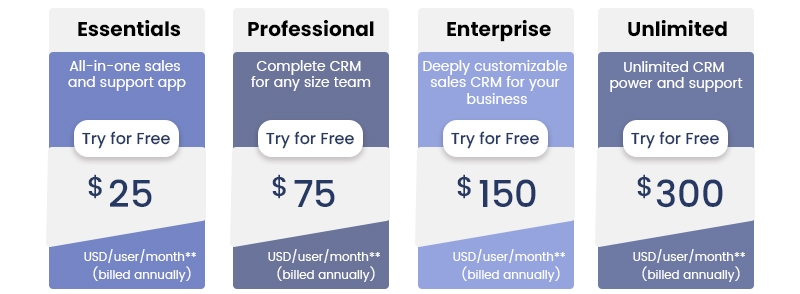
Let’s begin with the cornerstone: Sales Cloud Pricing. This is Salesforce’s flagship product, designed to help sales teams manage leads, opportunities, and customer accounts. It’s offered in four main editions, each building upon the last in terms of features and capabilities.
The Essentials Edition is Salesforce’s entry-level offering, ideal for small businesses or startups. It provides basic CRM functionalities such as account and contact management, lead and opportunity tracking, case management, and access to the Salesforce mobile app. It’s designed for ease of use and quick setup, often with a limit on the number of users. This edition is a great starting point for those new to CRM.
Moving up, the Professional Edition is tailored for growing small to medium-sized businesses. It expands upon Essentials by adding features like sales forecasting, custom report types, mass email, and a more robust set of administration tools. This edition allows for more sophisticated sales processes and better team collaboration, enabling businesses to manage their sales pipeline more effectively and gain deeper insights into their performance.
The Enterprise Edition is where Salesforce truly begins to shine for larger organizations with complex sales processes. It includes everything in Professional, plus advanced features such as workflow and approval automation, custom profiles and page layouts, advanced reporting, and robust API access for integrations. This edition is highly customizable and scalable, making it suitable for businesses that require specific workflows or need to integrate with numerous other systems.
Finally, the Unlimited Edition is Salesforce’s top-tier offering for Sales Cloud, designed for large enterprises demanding the utmost in functionality, support, and scalability. It encompasses all Enterprise features and adds unlimited custom apps, Sandboxes for development and testing, enhanced data storage, and 24/7 toll-free support. This edition provides unparalleled flexibility and resources, making it the choice for global organizations with critical, high-volume sales operations.
Next, we turn our attention to Service Cloud Pricing. This cloud focuses on customer service and support, helping businesses deliver personalized customer experiences across multiple channels. Like Sales Cloud, it also comes in Essentials, Professional, Enterprise, and Unlimited editions, with similar feature progression.
For Service Cloud, the Essentials Edition provides a basic help desk solution, including case management, knowledge base access, and web-to-case functionality. It’s perfect for small teams looking to centralize customer inquiries and provide fundamental support. This allows for basic tracking and resolution of customer issues.
The Professional Edition for Service Cloud enhances capabilities with features like service contracts, entitlements, CTI (Computer Telephony Integration) integration, and more advanced reporting. It’s suitable for growing service teams that need to manage service level agreements (SLAs) and integrate their telephony systems for a more streamlined support experience.
The Enterprise Edition of Service Cloud offers sophisticated tools for larger service operations, including advanced case management, workflow and approval automation, custom profiles, and robust API access. It’s designed for businesses that need to automate complex service processes, manage multiple support channels, and provide highly customized customer interactions.
The Unlimited Edition for Service Cloud provides the most comprehensive set of features, including unlimited custom apps, Sandboxes, enhanced data storage, and premier 24/7 support. It’s ideal for enterprises with high-volume customer service needs, complex support structures, and a requirement for maximum flexibility and uptime.
Marketing Cloud Pricing is notably more complex than Sales or Service Cloud. It’s not sold on a simple per-user basis but rather through various modules or ‘studios’ that cater to different marketing functions, such as email marketing, journey builder, mobile marketing, social media marketing, and advertising. Pricing is often tiered based on database size, email volume, or feature sets, and typically requires a custom quote.
Other significant Salesforce products and their pricing considerations include:
- Experience Cloud (formerly Community Cloud): For building portals and communities, priced based on login numbers or member capacity.
- Commerce Cloud: For B2B and B2C e-commerce, typically priced based on a percentage of Gross Merchandise Value (GMV).
- Analytics Cloud (CRM Analytics/Tableau CRM): For business intelligence and reporting, priced per user with various tiers.
- Tableau: A powerful data visualization tool acquired by Salesforce, priced per user with different roles (Viewer, Explorer, Creator).
- MuleSoft: An integration platform, priced based on usage (e.g., API calls, data volume).
- Slack: The popular communication platform, now part of Salesforce, offered in Free, Pro, Business+, and Enterprise Grid tiers, priced per user per month.
These products often require separate subscriptions and can significantly add to your overall Salesforce investment.
Several key factors influence the final cost of your Salesforce implementation. The number of users is paramount; more users mean higher subscription fees. The edition chosen directly impacts the feature set and per-user cost. Add-ons and integrations from the Salesforce AppExchange, while incredibly powerful, often come with their own subscription fees. Your specific customization needs will dictate the complexity and cost of initial setup and ongoing maintenance. Furthermore, higher-tier support plans beyond standard support will increase costs. Finally, the contract length can sometimes be a negotiation point, with longer commitments potentially yielding better rates.
It’s essential to be aware of potential hidden costs that can inflate your total cost of ownership (TCO). Implementation costs are often the largest initial expense, especially if you hire external consultants for setup, data migration, and customization. Training for your users is crucial for adoption but also incurs costs, whether through Salesforce University, third-party providers, or internal resources. Ongoing maintenance and administration, including managing updates, user permissions, and data hygiene, require dedicated personnel or consultancy. Exceeding standard data storage or API call limits can lead to additional charges. Always factor these into your budget planning.
For businesses looking to optimize their Salesforce investment, several strategies can prove effective. Start small and scale up: Begin with a lower edition that meets your immediate needs and upgrade as your business grows and requirements evolve. Negotiate: Especially for larger deployments or longer contracts, there’s often room for negotiation on pricing. Leverage the AppExchange strategically: While add-ons cost money, a well-chosen app can provide significant value and avoid costly custom development. Regularly review user licenses and usage: Ensure you’re not paying for inactive users or features you don’t utilize. Finally, consider Salesforce’s promotional offers or discounts, which are sometimes available for new customers or specific industries.
Let’s address some common questions users have about Salesforce pricing.
Is Salesforce expensive? The answer is nuanced. While its list prices might seem high compared to some basic CRM tools, Salesforce offers unparalleled scalability, a vast feature set, and a robust ecosystem. For businesses that fully leverage its capabilities, the return on investment can far outweigh the cost. For others, particularly very small businesses with minimal needs, it might be overkill.
What’s the cheapest Salesforce edition? The Salesforce Essentials edition for both Sales Cloud and Service Cloud is typically the most affordable entry point. It’s designed for small businesses and offers core CRM functionalities at a lower per-user monthly cost.
Does Salesforce have a free version? Salesforce does not offer a perpetual free version of its core CRM products. However, they frequently offer free trials (usually 14 or 30 days) for their various editions, allowing businesses to test the platform before committing to a subscription.
How much does Salesforce cost for a small business? For a small business, costs can range significantly. A team of 5 users on Sales Cloud Essentials might pay around $125/month ($25/user/month * 5 users, billed annually). As needs grow to Professional Edition or include Service Cloud, this can quickly rise to several hundred or even thousands per month, not including implementation or add-ons.
How do I get a Salesforce discount? Discounts are often available through direct negotiation with Salesforce sales representatives, especially for larger contracts, non-profits, or public sector entities. Attending Salesforce events or working with an authorized Salesforce partner can sometimes also unlock special offers.
What are the different Salesforce license types? Beyond the primary Sales Cloud and Service Cloud licenses, Salesforce offers various specialized licenses for specific roles or functionalities. These include Community Cloud user licenses (Customer Community, Customer Community Plus, Partner Community), Platform licenses (for users needing only custom app access), Chatter licenses, and various add-on feature licenses. Each has its own pricing model and feature set.
Salesforce offers a compelling list of advantages that justify its investment for many organizations.
- Comprehensive Feature Set: It provides an incredibly broad range of functionalities across sales, service, marketing, and more, often eliminating the need for multiple disparate systems.
- Scalability: Salesforce can grow with your business, from a small startup to a global enterprise, adapting to evolving needs and user counts.
- Robust Ecosystem: The AppExchange offers thousands of pre-built integrations and applications, extending Salesforce’s capabilities significantly.
- Reliability and Security: As a cloud leader, Salesforce invests heavily in infrastructure, security, and uptime, ensuring your data is safe and accessible.
- Innovation: Salesforce continuously invests in R&D, regularly releasing new features and technologies like AI (Einstein) to keep its platform cutting-edge.
- Mobile Accessibility: Its powerful mobile app ensures your team can access critical data and perform tasks from anywhere.
However, it’s equally important to consider the potential drawbacks:
- Cost Complexity: As discussed, the pricing structure can be confusing, making it difficult to budget accurately without thorough research.
- Potential for High Overall Expense: While per-user costs might seem manageable, the cumulative cost with multiple users, higher editions, add-ons, and implementation fees can become substantial.
- Steep Learning Curve: New users, especially those unfamiliar with CRM, may find the platform overwhelming initially, requiring significant training.
- Over-customization Risks: While customization is a strength, excessive or poorly planned customization can lead to higher maintenance costs, upgrade difficulties, and system instability.
- Vendor Lock-in Perception: Migrating data out of any comprehensive CRM system can be challenging, leading some to perceive a degree of vendor lock-in.
- Resource Intensive: Effective Salesforce administration often requires dedicated internal resources or ongoing external support, adding to operational costs.
In conclusion, Salesforce pricing is not a simple figure but a dynamic calculation based on your business’s unique requirements. While the initial sticker price might seem daunting, understanding the tiered editions, the vast array of available Clouds, and the factors influencing your total cost of ownership is paramount. For businesses seeking a powerful, scalable, and highly customizable CRM solution, Salesforce offers immense value. However, careful planning, strategic edition selection, and diligent cost management are essential to maximize your return on investment and ensure Salesforce truly becomes an asset, not just an expense.
By thoroughly evaluating your needs, starting with the right edition, and being mindful of potential hidden costs, you can harness the full power of Salesforce to transform your customer relationships and drive business growth effectively. Always consult the official Salesforce website or a certified partner for the most current and personalized pricing information.
